The Land & Campus

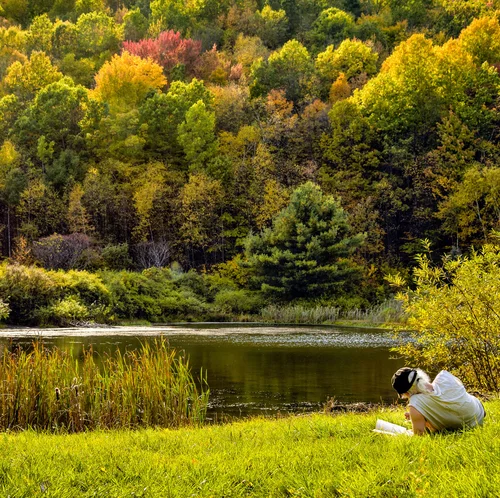
Easton Mountain sits between two ridges — Easton Mountain itself to the west and Herrington Hill to the east — on land that holds forest, meadow, trail, and water in a quiet valley largely hidden from the rest of the world. The campus is secluded in a way that feels intentional, even when you know it’s simply geography.

The surrounding landscape is not incidental to what happens here. The trails, the ponds, the silences between trees — they are part of the retreat. Men come to Easton Mountain for workshops and community, and they leave having also spent time with the land. That exchange is part of what makes this place work.

The geology and ecology of this corner of upstate New York is unique in the United States. We’re glad to share it with you.
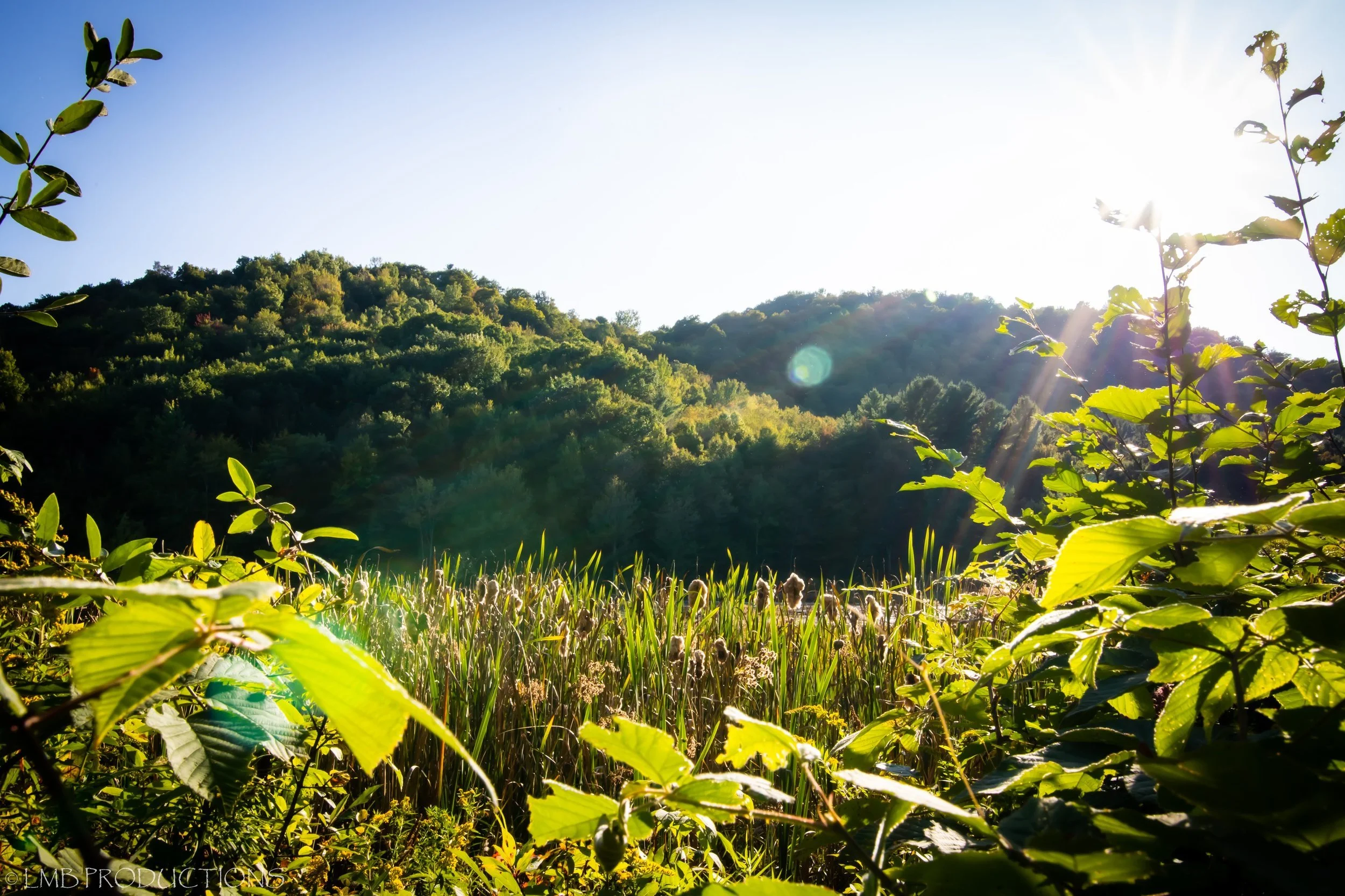
Easton Mountain campus — forest, meadow, and valley

Hiking Trails

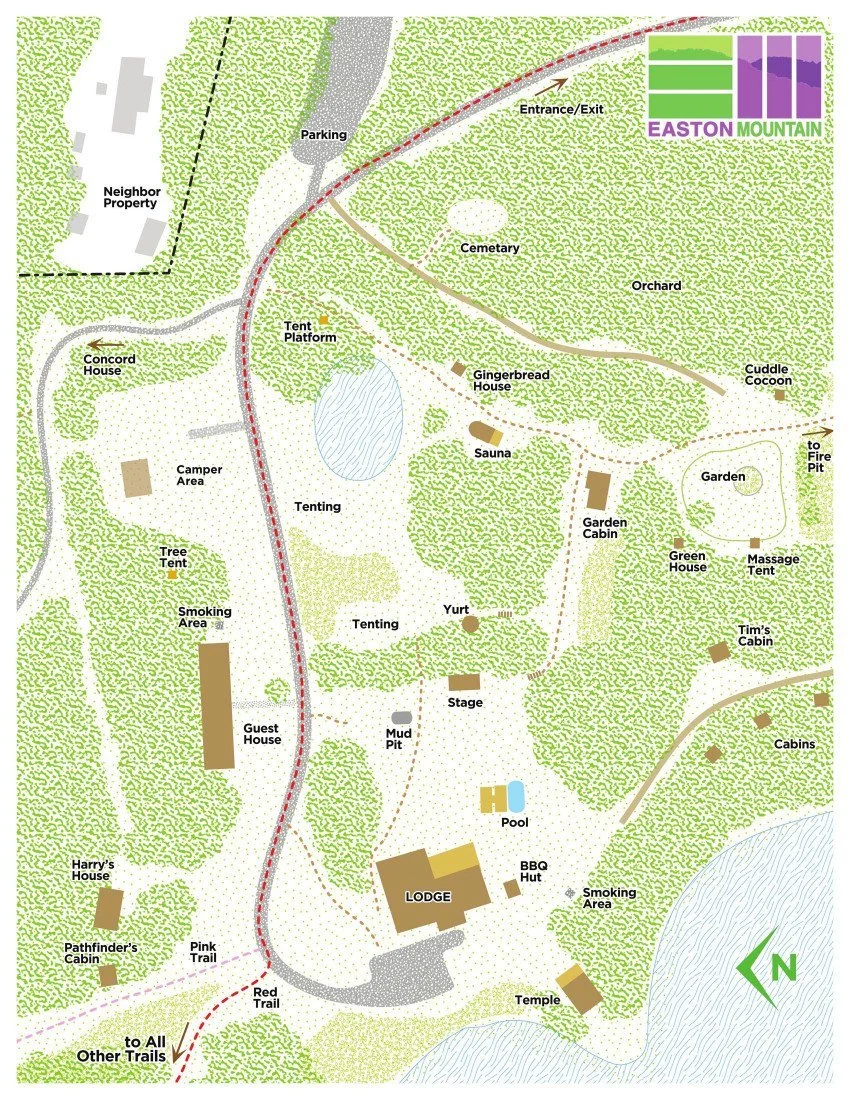
The campus includes many well-walked and marked hiking trails for those who want to explore. Immerse yourself in the flora and fauna of the land — take a leisurely stroll around the pond on the Red Trail, where you’ll visit the Grandfather Oak, or challenge yourself by hiking to the summit of Easton Mountain itself.

Download the trail map →

The ponds at Easton Mountain

The Ponds

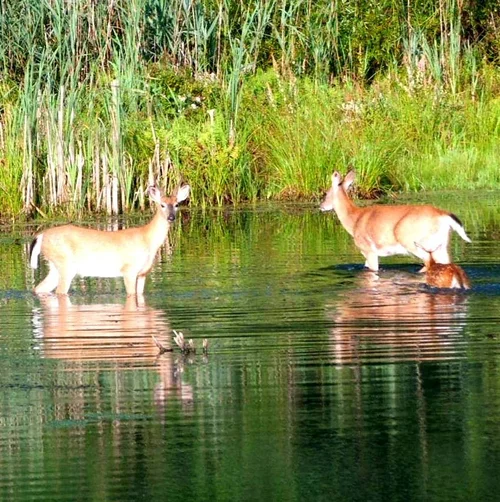
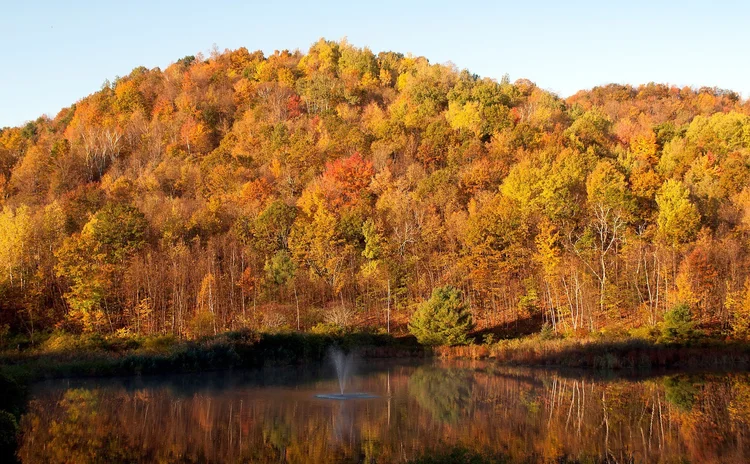
Easton Mountain has two ponds, each with its own character. The larger lower pond, near the Lodge, was created by beavers — the same beavers, and their families, that you may spot on an early morning walk. The upper pond, near the Garden Cabin, is man-made. Both are home to ducks, geese, and other wildlife.

Take a canoe out on the lower pond and explore. Relax in the wood swing. Or sit on the deck of the upper pond and listen to the quiet murmur of the fountain. These are the kinds of moments that stay with you.

The Garden

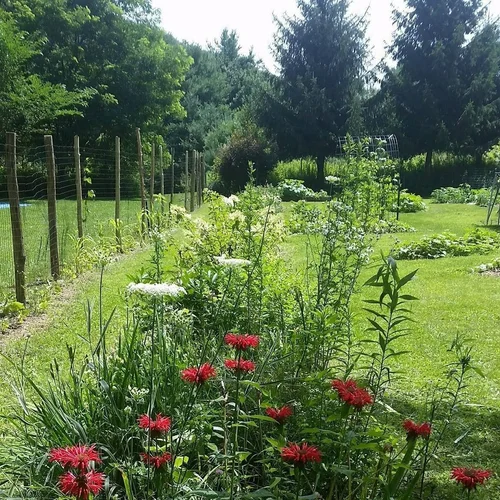
Our garden cultivates tomatoes, lettuce, squash, herbs, and other seasonal produce. What grows here supplements meals during retreats — a short, honest path from soil to table that reflects Easton’s commitment to living in right relationship with the earth.

More than a source of ingredients, the garden is a place to slow down. It’s a space for quiet work, for reconnecting with something living, for finding a kind of peace that isn’t available in a workshop room.

The Easton Mountain garden
The Memorial Garden at Easton Mountain

The Memorial Garden

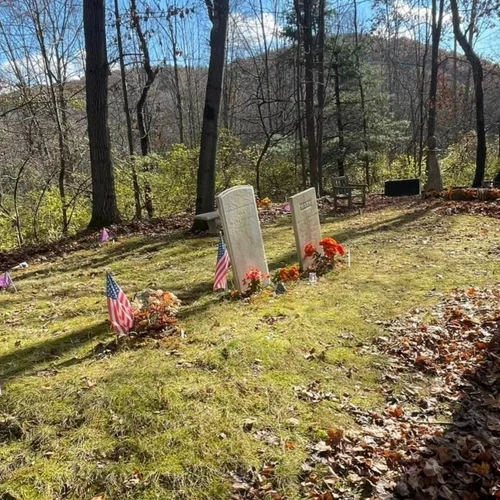
Located above the apple orchard, the Memorial Garden was originally established as a family cemetery by the Harrington family, early settlers in this valley around the time of the American Revolution. It is a place of deep history and quiet presence.

Easton Mountain has added a sculpture designed by artist and community member Moss Tidd — an altar to the ancestors, with a columbarium for the ashes of those who have passed. It remains a peaceful space where loved ones are remembered and where the long arc of this land’s human story is held with care.

Land Acknowledgement

It is with gratitude and humility that we acknowledge that we are learning, speaking, and gathering on the ancestral homelands of the Mohican people, who are the indigenous peoples of this land. Despite tremendous hardship in being forced from here, today their community resides in Wisconsin and is known as the Stockbridge-Munsee Community. We pay honor and respect to their ancestors past and present as we commit to building a more inclusive and equitable space for all. For more information, please visit mohican.com.

The Hudson Valley foothills and surrounding mountains
The Region

Our little valley

Easton Mountain is in Washington County, New York, tucked into a geography shaped by mountain ranges in every direction. To the north and west, the Adirondacks. To the east, the Green Mountains of Vermont. To the south, the Taconics — the same ancient range Easton Mountain itself belongs to.

Within an hour’s drive: Albany, Saratoga Springs, Lake George, and smaller towns like Greenwich, Cambridge, and Schuylerville that have been here since before the country was. The land around campus is agricultural and pastoral — dairy farms, apple orchards, rolling hills.

Easton sits on Fly Creek, a branch of the Batten Kill, where perch, salmon, and pike are commonly caught. Fly Creek flows south into Wampecack Creek, which feeds into the Hoosic River.

Rolling hills and mountain ranges surrounding Easton Mountain

Who else lives here

Native Animals
Whitetailed Deer Monarch Butterflies Blue Jays Bobcats Coyotes Beavers Star-nosed Moles
Native Plants
Black Cherry Sugar Maple White Pine Garlic Mustard Queen Anne’s Lace Heal-all Witch Hazel Lilac Yarrow

Mountains born from a collision 450 million years ago

Easton Mountain is part of the Taconic Mountains, which run from the northwest corner of Connecticut north through Vermont. These mountains are old in a way that is genuinely difficult to hold in the mind: they were born more than 450 million years ago, during an event geologists call the Taconic Orogeny — from the Greek oros (mountain) and genesis (origin).

At that time, the tectonic plates carrying what would become North America and Europe were on a collision course. That collision created a chain of volcanic islands. Those islands, still riding their plate, eventually drove into the continent — shearing up and over mountains that were already standing. The resulting Taconic Mountains may originally have reached over 10,000 feet.

What you see today are the deeply eroded remnants of that event. The rocks you’ll find on and around the Easton campus — graywacke, shale, slate, and chert — are the physical record of it. Fossils found in areas geologically similar to this part of New York include sponges and arthropods from those early eras.

The peaks are worn-down shells of what they once were. The thought that they could originally have been more than 10,000 feet tall continues to move people who come here seeking peace in the natural world.